
Creative IP,
Qantica connects screenwriters with studios and platforms through QIP, a patented methodology that takes original stories from first draft to market-ready IP.
From first draft to market-ready IP
QIP is a proprietary methodology refined through repeated evaluation by professional screenwriters. It underpins specialized LLM development on AWS cloud infrastructure. Each project follows four steps: analyze, improve, certify and sell.
Analyze
Non-generative AI reads the script against 20 narrative criteria and returns a prioritized list of Improvement Points (IPI).
Output: IPI score + issue listImprove
The Tutor and specialist advisors guide the author through each point. The author writes every word; the system asks, never writes.
Output: iterations, resolved pointsCertify
Initial and final IPI are sealed on blockchain. The change between them forms the quality certificate a buyer can verify.
Output: verifiable improvement recordSell
Certified works go to auction. Studios and platforms bid on the rights with the certificate, the showcase and the authorship record in hand.
Output: a potential rights deal between author and buyer, facilitated by QanticaA tutor that has read the whole script
Ask questions about your script, explore ideas and make creative decisions with a Tutor that knows the work.
Ask the Tutor
Pick a question or type your own to see how the Tutor guides revision in the sample project.
Scripted demo using Mantis (52 scenes, iteration 1). The real Tutor works with your script inside the platform.
Specialists on call
AI specialists bring medical, military, psychological and criminological perspectives to your story, using your project’s context.
Improvement points, prioritized
Issues are categorized, scored and tracked to resolution, so the writer knows what to work on next and why.
Incoherent psychological transition in Javi's turn toward submission
The jump from panic and attempted escape to voluntarily becoming a servant lacks a solid internal justification, weakening the credibility of his arc at the end of act two.
How could the protagonist's earlier behaviour foreshadow this surrender? Which latent elements in his inner conflict would justify the loss of resistance?
From script to storyboard, bible and game design
Visual and development materials accompany the script for studio review.
QIP Games turns a screenplay into a game adaptation blueprint: the Qantica Design Document (QDD). It outlines format, mechanics, scope and target platforms for a studio to evaluate.
Measured, not felt
Track resolved improvement points across iterations and review the record alongside the script and supporting materials. Illustrative project shown.
The author writes. Always.
Write scenes in professional screenplay format and track revisions with version history. Every line remains the author's.
Your work is never used to train AI models
Only anonymous metrics leave the project. Dialogues, plots, characters and descriptions never cross the line. Every milestone of the process is sealed on a public chain nobody can edit.
What leaves the project — and what never does
The analysis engine is calibrated with numbers, not with stories.
Never used for model training
- The full text of your script, scenes or dialogues
- The names, plots or arcs of your characters
- Any identifiable creative content from your work
- Fragments, summaries or derivatives of your narrative material
We do use (anonymous data)
- Initial and final IPI of the project (aggregated metric)
- Number of iterations and average resolutions per iteration
- Percentage of improvement points identified per thematic block
- Performance of the model used in each system process
Built into the product, not the terms of service
Open Work Protection in your project to see how data flows and which seals are in place.
The protection chain of a work
Five moments, five digital seals, permanently recorded. Nobody can alter a link without breaking the chain.
Original Work Registration
A unique fingerprint of the work exactly as written, before the system touches it.
On first uploadInitial Diagnostic Logging
The first IPI and its issue list become the protected starting point.
After the first analysisGuided Q&A Registry
Records the guided questions and the author’s responses throughout the development process.
During iterationsScript Change Tracking
Tracks the author’s script revisions and scene changes across iterations.
As scenes are writtenFinal Enhanced Work Certification
The finished work is sealed with its improvement metric: a complete, verifiable process record.
On completionCertified works go to auction
Certified works go to auction for studios and platforms to bid on the rights. Qantica participates in every successful sale.
A clearer basis for buyer decisions
Buyers can review the improvement record, authorship chain and interactive showcase for every certified work.
A work is listed when its final certificate exists: initial and final IPI sealed, authorship chain complete.
Bidders review the certificate and showcase before bidding on rights for the work’s formats: film, series, games or music.
Enterprise licenses plus participation in successful IP sales. The platform's incentive is the sale, not the subscription.
Mantis
What a validated IP looks like
Projects that go through QIP receive an interactive showcase for studios, platforms and partners to explore.
Mantis
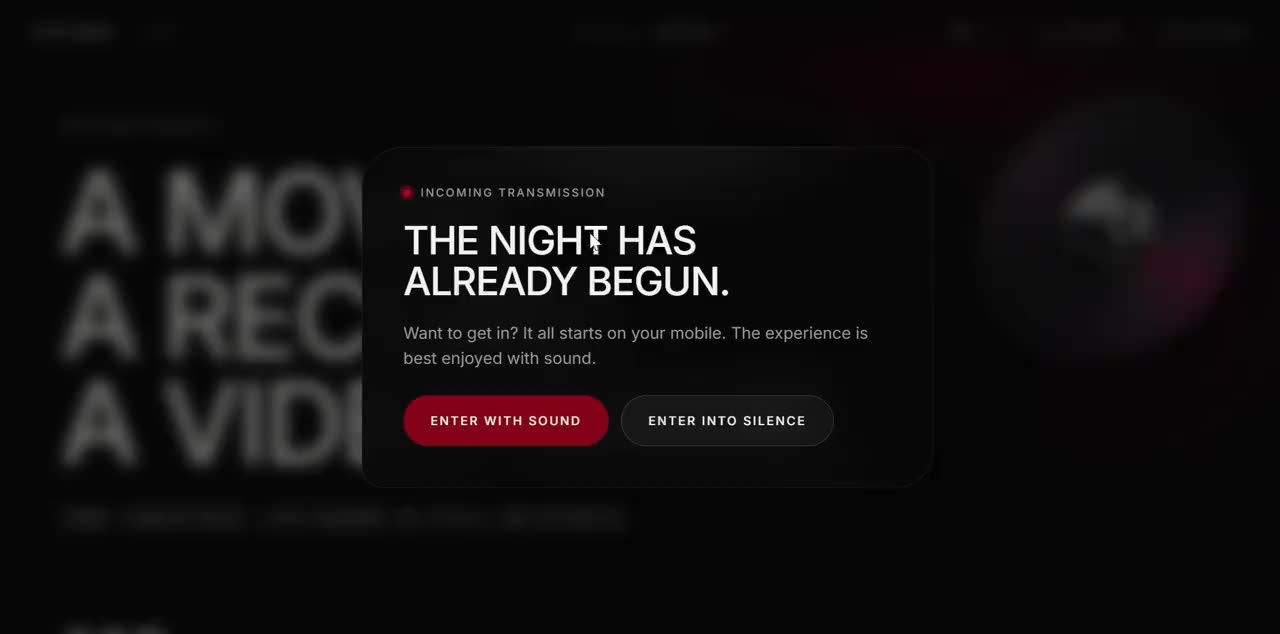
One universe across three formats. A signal connects cinema, music and play inside the world of Xina Mora. The audience enters from their phone.
Fumigarios
A bankrupt family pest-control business in Buenos Aires starts taking far deadlier jobs. Comedy first, drama always.
One standard.
Every format.
A single intake standard for film, series, games and music. Projects arrive analyzed, iterated and certified, with verifiable authorship records that help acquisition teams compare submissions and prioritize review.
- Verifiable change in IPI on every certified work
- Human-authorship proof, sealed on chain (BC1–BC5)
- Bible, storyboard and QDD delivered with the script
- Buyer access to the auction of certified works
- Enterprise licensing, infrastructure validated with AWS
QANTICA · QIP CERTIFICATE

Work          Mantis
Formats       Film · Album · Game
Methodology   QIP · patented
Authorship    Human · sealed BC1–BC4
IPI           initial 23 → final 0 · 4 iterations
Training use  none · creative content never leaves the project
Status        Certified · BC5
{
  "work": "Mantis",
  "methodology": "QIP · patented",
  "author": "sealed · human",
  "seals": ["BC1", "BC2", "BC3", "BC4", "BC5"],
  "ipi": { "initial": 23, "final": 0, "iterations": 4 },
  "formats": ["film", "album", "game"],
  "training_use": false,
  "verified": true
}
seal   event                                  fingerprint          status
BC1    Original Work Registration             9f3a…c21e            confirmed
BC2    Initial Diagnostic Logging             41d7…8b0f            confirmed
BC3    Guided Q&A Registry                    e02c…77aa  ×18      confirmed
BC4    Script Change Tracking                 b5e1…03d4            confirmed
BC5    Final Enhanced Work Certification      6c9d…f1e2            confirmed

chain integrity  valid · every link references the previous one
Choose how to work with Qantica
Request early access
Request an invitation to develop your screenplay on the Qantica platform. The team will follow up by email about your request and next steps.
- QIP analysis on 20 narrative criteria
- Tutor and specialists with full project context
- Blockchain registration from the first upload
- Your work is never used to train models
Already have access? Sign in
Get enterprise access
License QIP as your intake standard, with hands-on onboarding.
- Pipeline of QIP-certified projects
- Verifiable authorship and improvement records
- Dedicated onboarding and integration support
- Infrastructure validated with AWS
Frequently asked questions
Is Qantica a generative AI company?
QIP analyzes your script and guides revision without writing or rewriting it. Every line remains the author's. After the script has been curated, AI-generated images support storyboards and other visual materials.
What exactly is patented?
QIP, the methodology that takes a work through analysis, measured iteration and certification. It's the standard the platform runs on and the one we license to studios and platforms.
How does Qantica approach games?
QIP Games prepares the adaptation blueprint; the game studio develops the game. The QDD helps a studio assess the opportunity before development, and adaptation rights may be offered at auction.
Who owns the work and the data?
The author, always. Creative content never leaves the project and is never used to train, fine-tune or improve any model. Only anonymous, aggregated metrics calibrate the analysis engine.
What goes on the blockchain?
Digital fingerprints, not content: the original work (BC1), the initial diagnosis (BC2), guided questions and author responses (BC3), script revisions and scene changes (BC4) and the final certificate with its improvement metric (BC5). Anyone can verify the chain; nobody can read the script from it.
How does Qantica make money?
Two paths: enterprise licensing of QIP to studios and platforms as an intake standard, and participation in successful IP sales when certified works are sold at auction. Qantica earns when the author earns.